
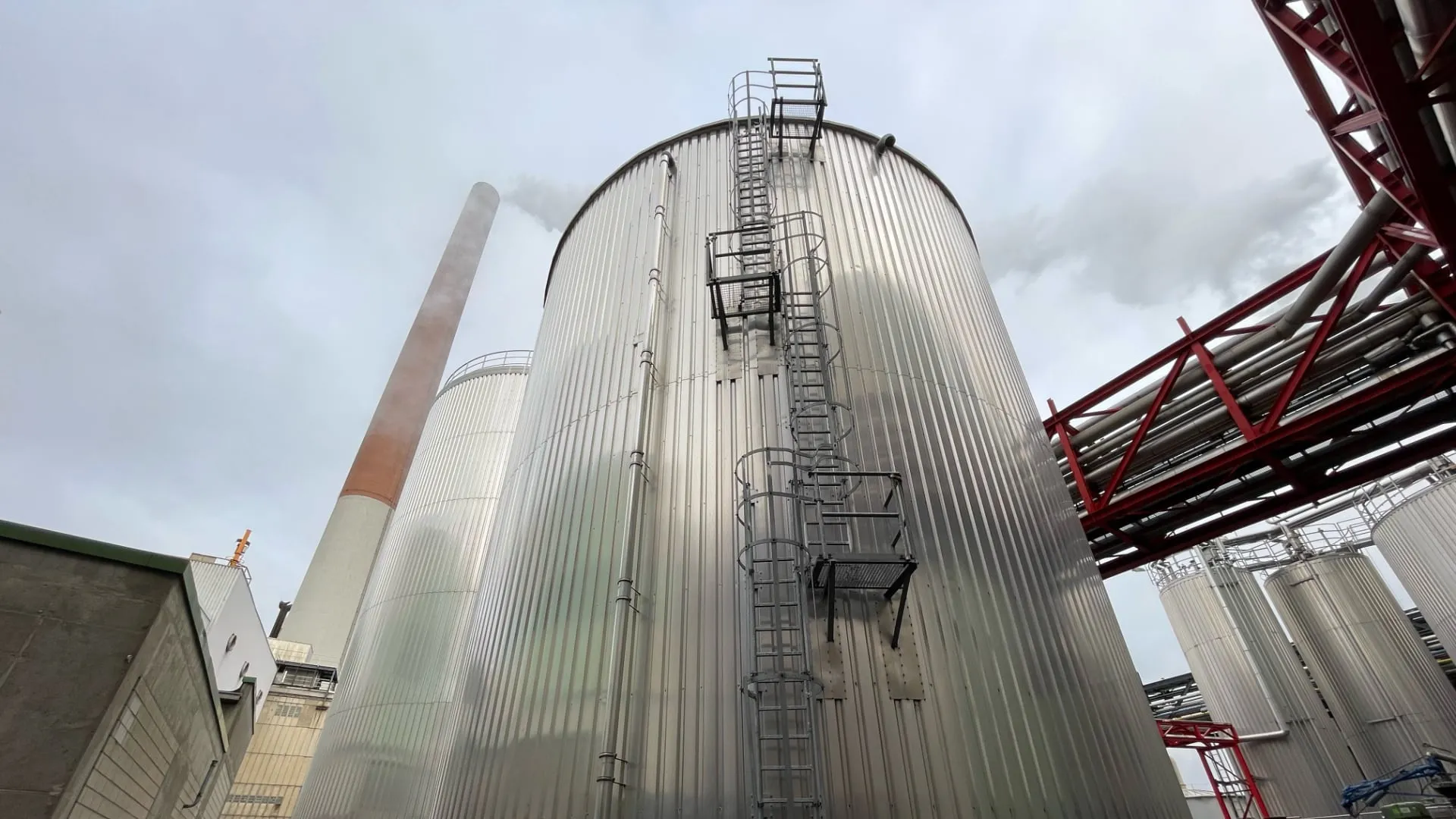
Sprinkler Tank Inspection by Underwater Drone – WITHOUT Draining, WITHOUT Human Entry
Kopterflug inspects sprinkler tanks, fire water tanks and elevated storage vessels by underwater ROV – without draining, without decommissioning the fire protection system. Oriented to VdS CEA 4001 & FM Global 2-81. Fire protection stays active throughout.
- No draining – fire protection stays active
- MIC corrosion, deposits, coating damage – early detection
- VdS CEA 4001 / EN 12845 / FM Global 2-81 oriented documentation
- Up to 80% cost savings vs. conventional inspection
Sprinkler Tank Inspection by Underwater Drone: Standards-Compliant and Without Interruption
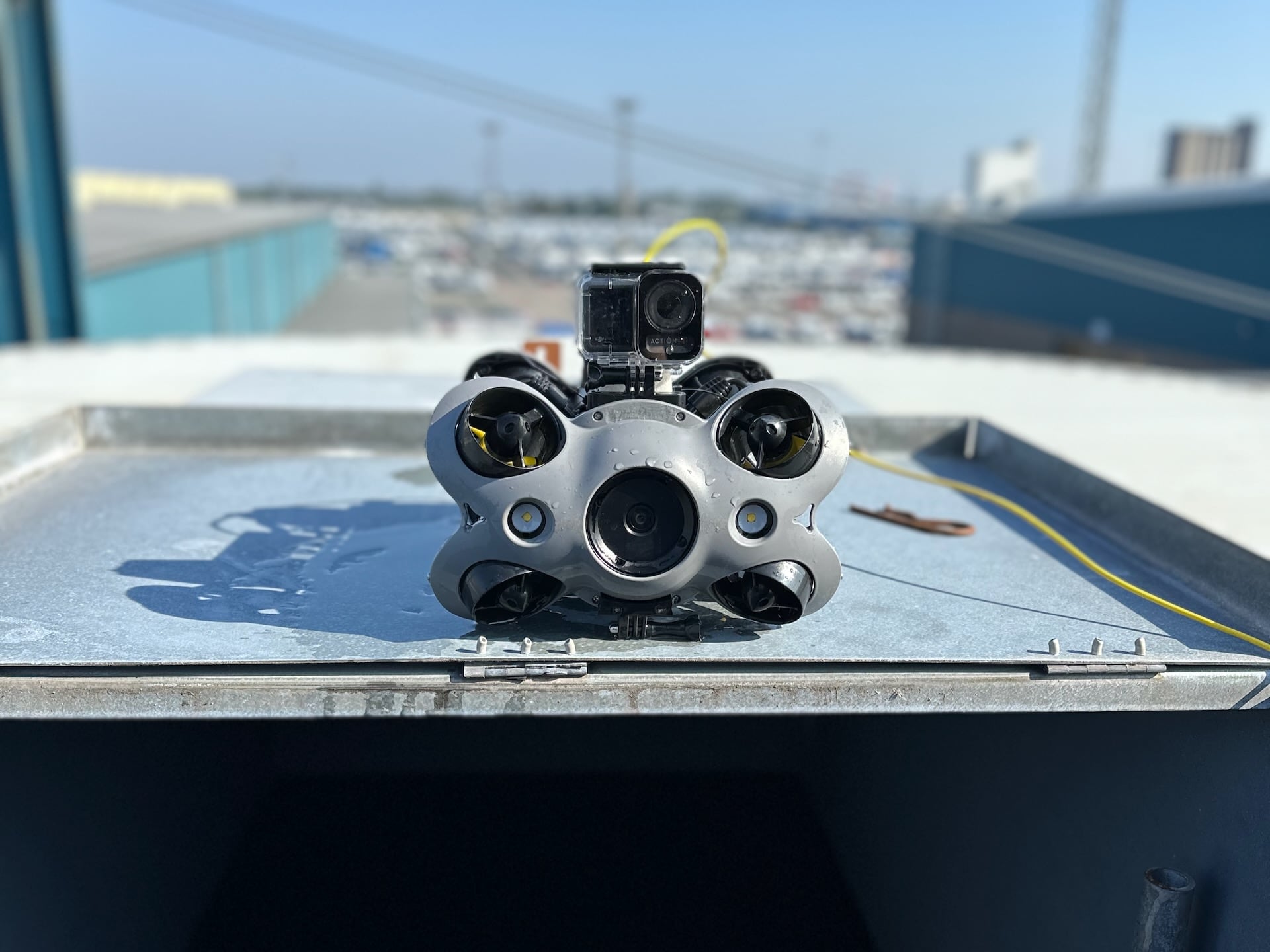
The underwater ROV in deployment – high-resolution documentation of sprinkler tanks without draining.
At Kopterflug, we offer sprinkler tank inspections by underwater ROV to secure the operational readiness of your fire protection. Our underwater technology enables precise inspections without draining – your fire water reserve remains fully intact.
Sprinkler tanks and fire water vessels are safety-critical assets. Draining for inspection means: fire protection out of service, fire brigade standby, regulatory approval, days to weeks of lead time. With our underwater ROV, we inspect the tank in filled condition – your sprinkler system remains ready for deployment at all times.
The most common damage remains invisible without regular inspection. Our ROV documents the current condition in high resolution per VdS CEA 4001, EN 12845 and FM Global 2-81 – for your insurer, your fire protection officer and regulatory inspections.
What we specifically check: MIC (Microbiologically Influenced Corrosion) – bacterial corrosion under sediment layers causing pitting from the inside, invisible to visual inspection from outside. Coating damage on epoxy and tar-epoxy systems: blistering, delamination and under-rusting, particularly at welds and manhole frames. Sediment build-up on the tank floor – up to 30 cm high depending on water quality, breeding ground for MIC and blocking of extraction nozzles. For concrete tanks additionally: carbonation, reinforcement corrosion and cracking at construction joints.
Underwater Drone – Sprinkler Tank Inspection Without Draining
Our services for sprinkler tanks and fire water vessels:
- Underwater ROV inspection: Specialised underwater ROV for the inspection of filled sprinkler tanks – high-resolution even with poor visibility and turbidity.
- Standards-compliant documentation: Documentation oriented to VdS CEA 4001, EN 12845 and FM Global 2-81 – as basis for insurers and authorities.
- No draining, no water loss: Fire protection stays active, no fire brigade standby, no regulatory approval – drastically reduced costs and lead time.
- Damage capture & maintenance planning: Systematic documentation of MIC corrosion, sediments, coating damage – basis for your maintenance planning.
What Our Underwater Drone Documents
We inspect sprinkler tanks and fire water vessels by underwater ROV and systematically document all safety-relevant areas. Technical assessment is handled by your fire protection officers and insurance surveyors – we deliver the data:
Tank Walls & Welds
High-resolution underwater footage of corrosion, wall thinning, pitting, weld damage. MIC corrosion (microbiologically induced corrosion) is the most common damage cause in sprinkler tanks – early detection prevents leaks.
Tank Floor & Sediments
Sediment deposits, floor sludge, floor corrosion, biological deposits. Sediments accelerate MIC corrosion and can block sprinkler nozzles. ROV inspection of the entire floor, documentation of sediment thickness and distribution.
Coatings & Linings
Coating damage, blistering, delamination, cracks in interior coatings. The interior coating protects the steel from corrosion – damaged areas are entry points for MIC and pitting.
Internals & Connections
Condition of extraction nozzles, suction lines, level sensors, internal pipework, riser pipes. Defective internals can impair the function of the sprinkler system.
Anti-vortex Plate & Suction Pipe Area
Condition of anti-vortex plate for corrosion damage, fixing problems and deposits. Suction pipe for through-rusting, blockage and coating damage. Both components are directly operationally relevant.
Water Change Zone
Corrosion at the interface between water and air space (water change zone) – the zone with the greatest phase-change stresses. Combination of ROV (underwater area) and ELIOS 3 (air space area) – complete documentation of the waterline from both sides.
Challenges in Sprinkler Tank Inspections
- Draining = complete fire protection failure: Shut down fire protection system, fire brigade on site, obtain approvals – one step and the entire system is out of service. ROV inspection runs parallel to normal operation, your fire protection remains continuously active.
- High costs + long lead time: Drain, clean, inspect, refill = 4–8 weeks downtime and five-to-six-figure costs. Plus provisional fire protection and specialists often booked out for months. Our ROV is done in 1–2 days and saves up to 80% of costs.
- Corrosion remains invisible: MIC corrosion, sediments, sludge and pitting develop unnoticed under water. Only at leakage or functional failure does the problem become visible – by then it is usually too late. The ROV detects damage early in HD quality.
- Safety risks for people: Conventionally either divers enter the filled tank or personnel enter the empty, narrow, dark vessel after draining. Hazards: poor visibility, toxic gases, drowning risk, bacterial contamination. ROV: 100% remote-controlled – zero risk to people.
- Water disposal & environmental impact: The drained water – often several hundred cubic metres – is contaminated by sediments, algae and microorganisms. Special disposal, lab analyses and approvals add up quickly: easily €5,000–15,000 extra. ROV: not a single drop of water is moved.
- Operating and insurance risks: While draining, the fire protection system is out of service – business interruption insurances often do not cover or only partially cover this. ROV: zero downtime, insurance cover remains intact.
- Incomplete & hard-to-trace documentation: Manual diver or visual inspections often only deliver verbal reports or unusable phone photos. ROV: HD video, structured findings report – legally sound and audit-proof.
Tank Types We Inspect by Underwater Drone
Sprinkler Tanks
Sprinkler water vessels per VdS CEA 4001 and EN 12845 – inspection without decommissioning the sprinkler system. Check MIC corrosion, sediments, coating.
- Typical findings: MIC corrosion, sediment deposits, coating damage, pitting, biological deposits
Fire Water Tanks
Fire water vessels for plant fire brigades and public fire water supply. Fire protection availability remains guaranteed during inspection.
- Typical findings: Corrosion, sediments, coating delamination, defective internals, leaks
Elevated Tanks & Water Towers
Drinking water elevated tanks and water towers – hygienically safe ROV inspection without draining and without contamination risk.
- Typical findings: Coating damage, lime deposits, corrosion, sediments, cracks
Drinking Water Tanks
Drinking water storage for industry and municipalities. Inspection documentation per TrinkwV – without supply interruption.
- Typical findings: Coating damage, biological deposits, sediments, corrosion at connections
Steel Tanks (welded & segmented)
Steel vessels in segment and welded construction – the most common form in the industrial sector. ROV inspection without draining for corrosion at welds, flange areas and tank floor.
- Typical findings: MIC corrosion at welds, pitting at tank floor, coating delamination, sediment deposits
Concrete Tanks & Prefabricated Vessels
Underground and above-ground concrete tanks – ROV inspection for cracking, carbonation, reinforcement corrosion and construction joint leaks without draining.
- Typical findings: Cracking, carbonation, reinforcement corrosion, leaks at construction joints
Conventional vs. Underwater Drone
| Aspect | Conventional | ROV |
|---|---|---|
| Draining | Yes – weeks without fire protection | No – tank stays filled |
| Time | Up to 1 week (incl. refilling) | A few hours |
| Fire protection | Inactive, fire brigade standby required | Continuously active |
| Requirements | Approval + replacement fire water | Minimal coordination |
| Documentation | Photos during inspection | 4K underwater video |
Benefits of Underwater Drone for Sprinkler Tanks
- No draining: Tank stays filled, fire protection stays active. No water loss, no fire brigade standby, no regulatory approval required.
- VdS CEA 4001 / EN 12845: Our documentation is oriented to VdS CEA 4001, EN 12845 and FM Global 2-81 – as basis for insurers and authorities.
- No operational interruption: Sprinkler system stays active. No provisional fire protection required. Inspection in hours instead of weeks.
- High-resolution underwater footage: Detailed documentation of corrosion, sediments and coating damage – even with poor visibility and turbidity.
- Up to 80% cost savings: No draining, cleaning and refilling costs. No fire brigade standby. Drastically cheaper than conventional inspection.
- MIC corrosion early detection: Microbiologically induced corrosion is the most common damage cause in sprinkler tanks. Our ROV detects MIC-typical damage before leaks develop.
How the Sprinkler Tank Inspection Works
Step 1: Initial Consultation & Preparation
We analyse your tank: size, construction type, age, last inspection. Which standard applies? VdS CEA 4001, EN 12845, FM Global? We advise you free of charge.
Step 2: Scheduling & Quotation
You receive a transparent quotation. No elaborate preparation needed – no draining, no fire brigade standby, no regulatory approval.
Step 3: On-Site Inspection by ROV
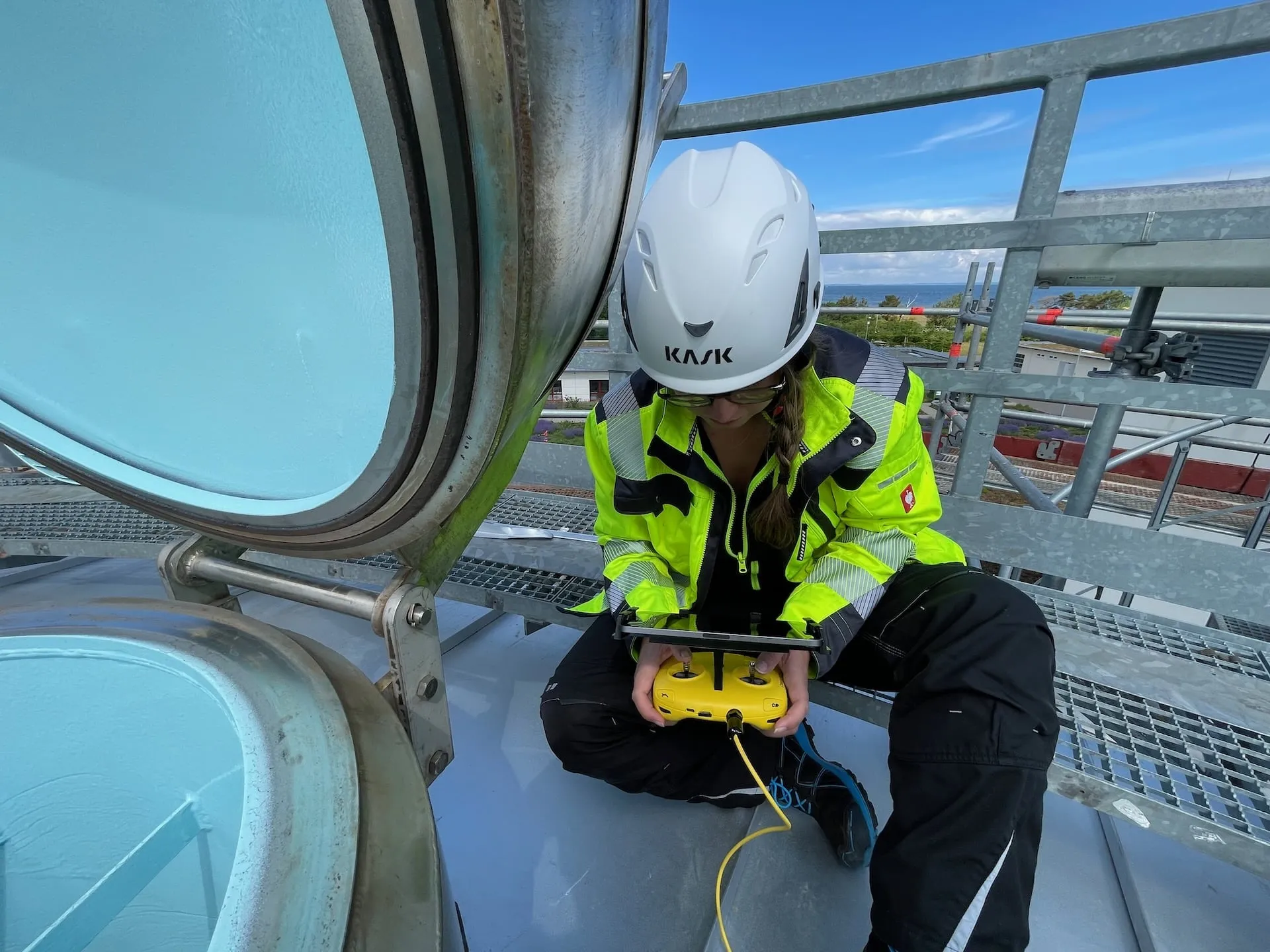
Our team deploys the ROV through an existing opening (manhole, inspection hatch). The inspection typically takes a few hours. Fire protection stays active.
Step 4: Inspection Report & Recommendation
You receive a detailed report with underwater footage, damage capture and condition assessment – oriented to VdS CEA 4001 / EN 12845 – as basis for your insurer.
Standards & Regulations
Sprinkler tanks are subject to extensive regulations from national standards, VdS guidelines and international insurer requirements. Typical inspection intervals: annual/quarterly fill level and fittings (operator obligation), every 5 years visual and condition inspection inside/outside, every 15 years comprehensive internal inspection. ROV inspection without draining is accepted under all mentioned regulations, provided it is documented in high resolution.
- VdS CEA 4001 (2024-01, 8th Edition): The central sprinkler guideline in Germany – defines requirements for water storage vessels, corrosion protection, replenishment and inspection intervals. Enables visual inspections in filled condition when documented. Supplemented by VdS 2091 for ongoing operation.
- DIN EN 12845 (current: 2020-11): European harmonisation standard for automatic sprinkler systems – regulates fire water supply (tanks, pumps), maintenance and inspections.
- BetrSichV: Requires recurring inspections of safety-relevant monitored systems. Sprinkler tanks fall under this depending on size and pressure – inspection obligation and intervals depend on risk classification.
- FM Global Data Sheet 2-81: Detailed ITM requirements for fire suppression systems incl. tanks: internal tank inspections every 5–10 years. Accepts visual methods without draining when documented.
- FM Global Data Sheet 3-2: Specifically for fire water tanks: requirements for construction, corrosion protection, inspection (inside/outside), cleaning and inspection intervals.
Your Partners for Sprinkler Tank Inspections
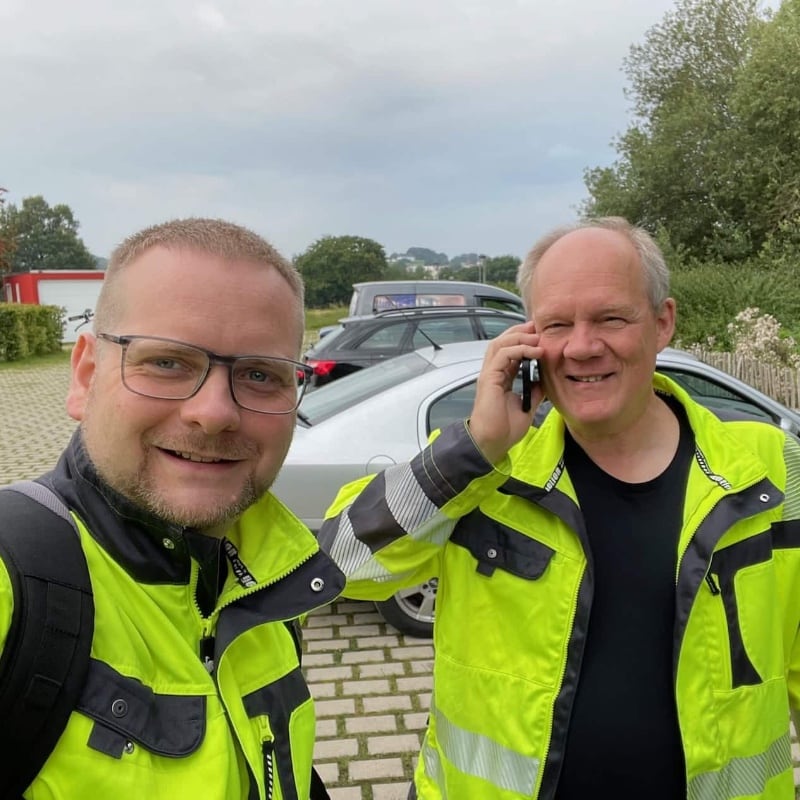
Christian Engelke and Dipl.-Ing. Karsten Lehrke – your direct contacts for sprinkler tank inspection.
Since 2017, we have been carrying out sprinkler tank inspections by underwater ROV – with experience from numerous inspections at sprinkler tanks, fire water vessels and elevated tanks throughout Germany. Documentation oriented to VdS CEA 4001, EN 12845 and FM Global 2-81. Your fire protection stays active, we deliver the data.
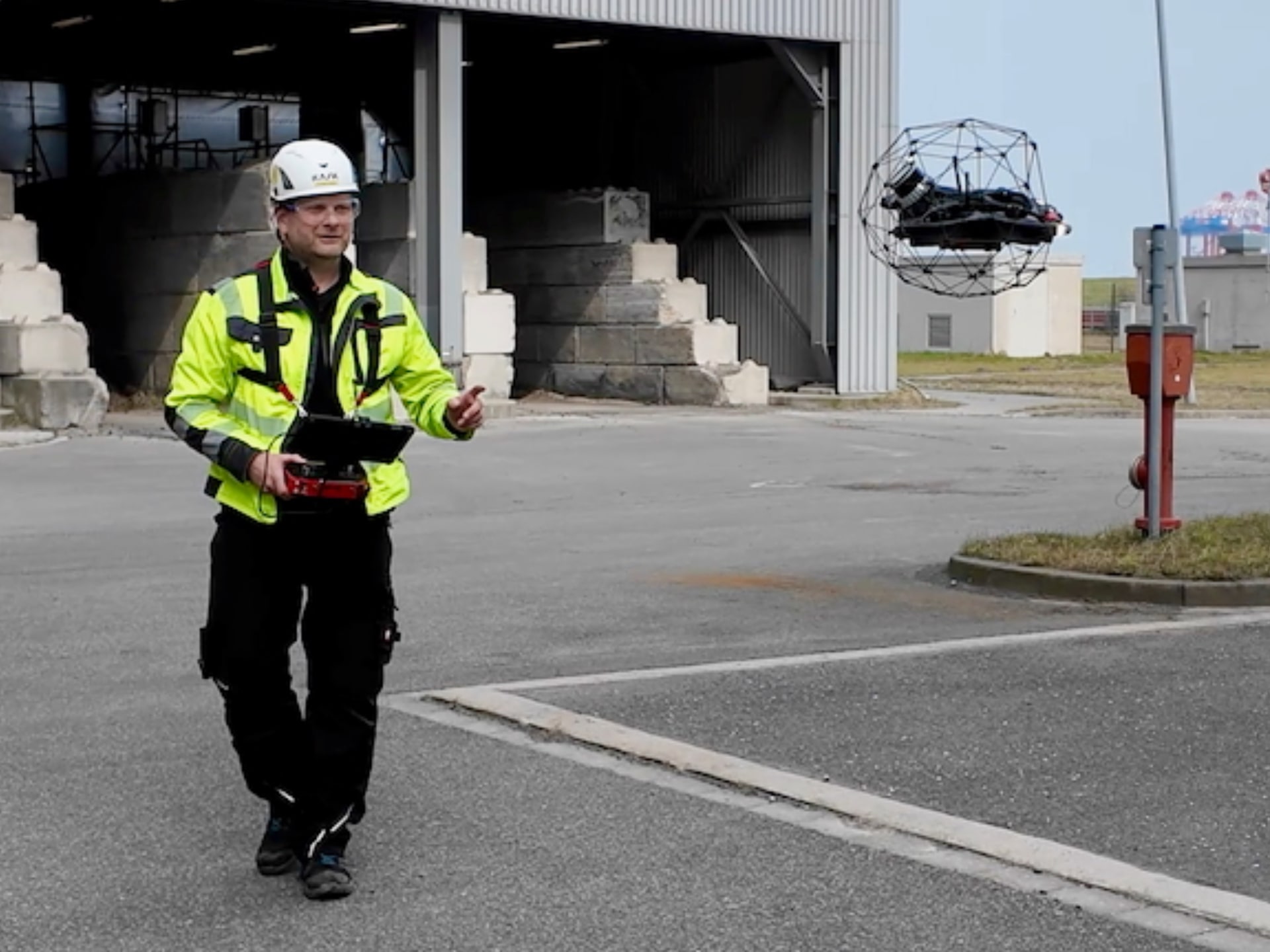 Christian
Founder & Drone Pilot
Christian
Founder & Drone Pilot
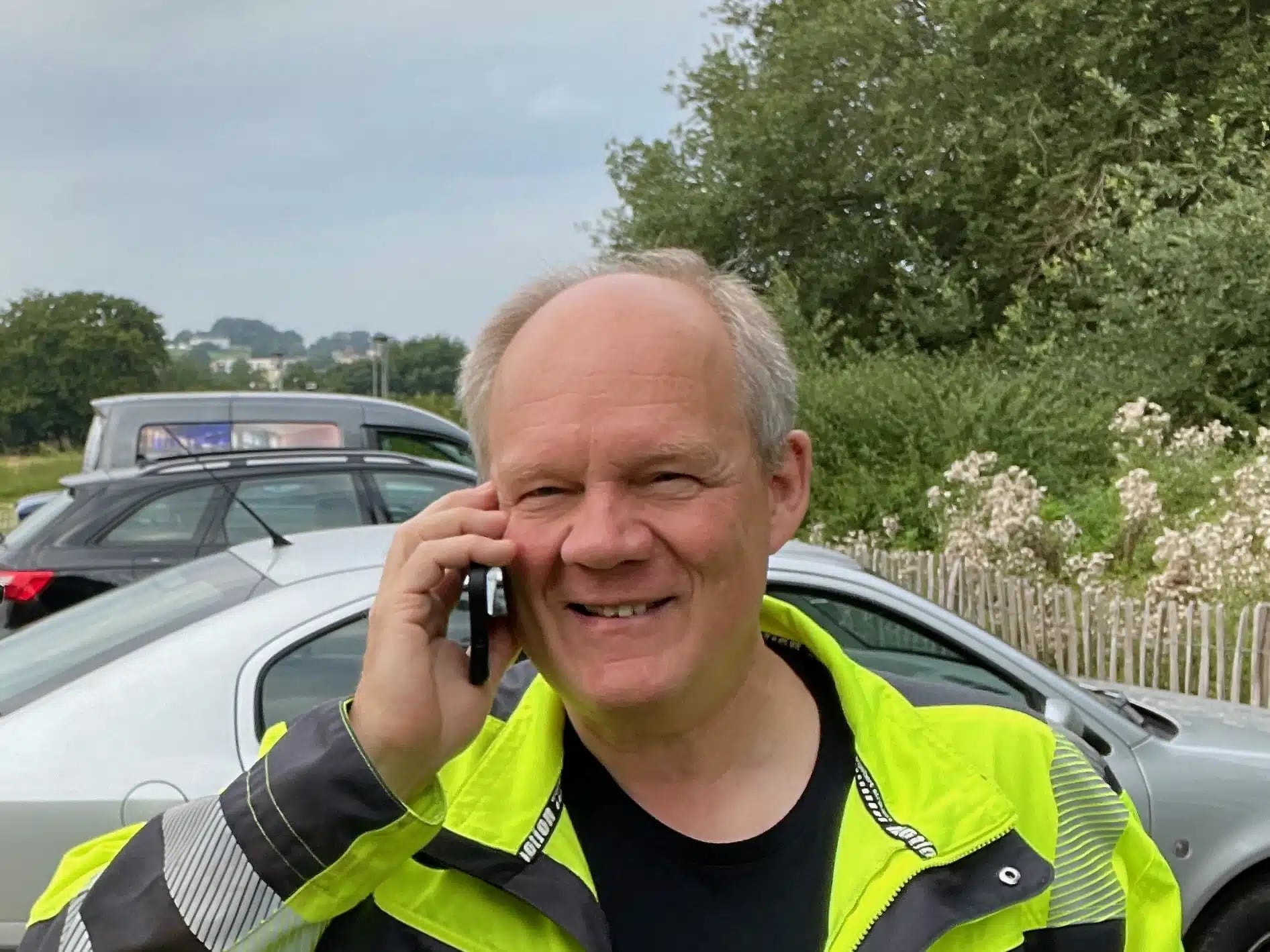 Karsten
Project Manager
Karsten
Project Manager
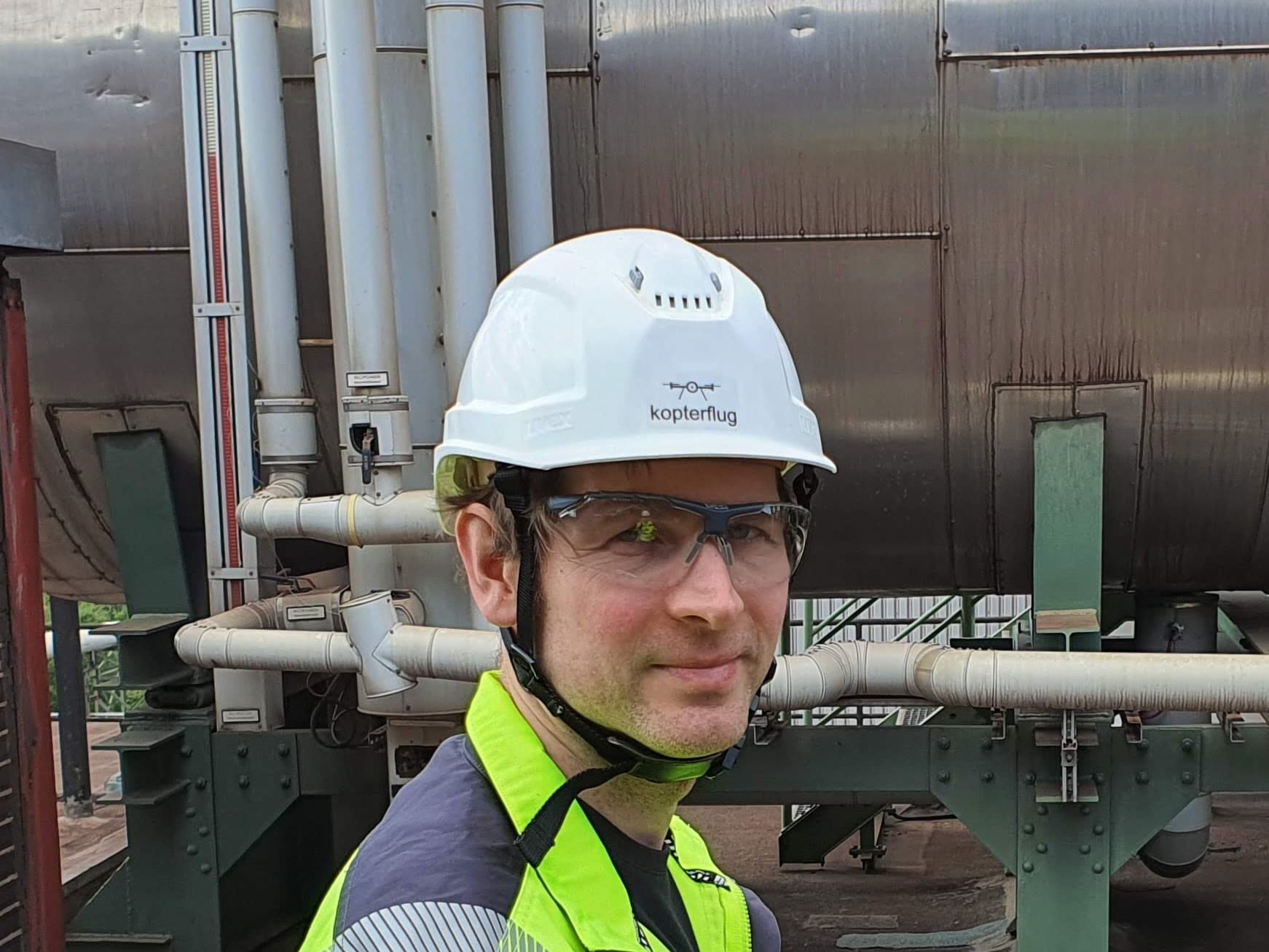 Philipp
Founder, Operations & Logistics
Philipp
Founder, Operations & Logistics
 Juliana
Drone Pilot
Juliana
Drone Pilot
 Stephan
Operations & Logistics
Stephan
Operations & Logistics
Related Services
- Tank Inspection – Interior walls, floors and coatings in process and storage tanks without draining.
- Underwater Inspection (ROV) – Tank floor and submerged structures by underwater drone.
- Confined Spaces – Inspection of enclosed industrial spaces without human entry.
- Water Management – Inspection of water infrastructure and water engineering plants.
- Condition Documentation – Systematic 4K documentation for asset management and insurance.
- Costs & Overhead – Overview of inspection costs and ROI calculations.
Frequently Asked Questions
What is an underwater drone and how does it work?
An ROV (Remotely Operated Vehicle) is a remote-controlled underwater vehicle with high-resolution camera and lighting. It is deployed through an existing opening (manhole, inspection hatch) into the filled tank and navigated by a pilot on the outside – while the tank remains completely filled.
What does inspection without draining mean in practice?
The vessel remains completely filled. The fire water stays in the system, the sprinkler system remains continuously operational – no replacement measures, no fire brigade standby, no refilling. The ROV is lowered through the manhole or inspection hatch and swims to all relevant areas.
Can sprinkler tank inspection also be carried out for older tanks without current documentation?
Yes – and especially for older tanks without complete inspection history, the sprinkler tank inspection by ROV is particularly valuable. We create comprehensive initial documentation oriented to VdS CEA 4001 – as a starting point for regular monitoring going forward.
Does the sprinkler tank have to be drained for inspection?
No, the tank stays filled. This is the decisive advantage of ROV inspection: no water loss, no disposal costs, no refilling. Your fire protection stays active throughout the entire inspection.
Does the tank have to be cleaned beforehand?
No. The inspection deliberately shows the real current condition – including sediments and deposits. Only this way can actual operating conditions and damage patterns be reliably documented. Cleaning before inspection would destroy the evidence.
Which standards apply to sprinkler tank inspection?
Our inspections meet the requirements of VdS CEA 4001 (sprinkler systems – planning and installation), EN 12845 (fixed fire extinguishing systems – sprinkler systems) and FM Global 2-81 (fire protection systems). The documentation is structured to serve as the basis for your insurer, your fire protection officer and regulatory inspections.
Is this also suitable for FM Global-insured plants?
Yes. The procedure has already been used in practice in FM Global environments. We are happy to work directly with the relevant contacts at your insurer on request.
How often should a sprinkler tank be inspected?
Typically every 5–15 years. In practice, we often see damage much earlier – particularly at older plants, elevated sediment formation or biological activity. We recommend inspection at the latest after 5 years, more frequently for older or heavily loaded tanks.
What data does the underwater drone deliver?
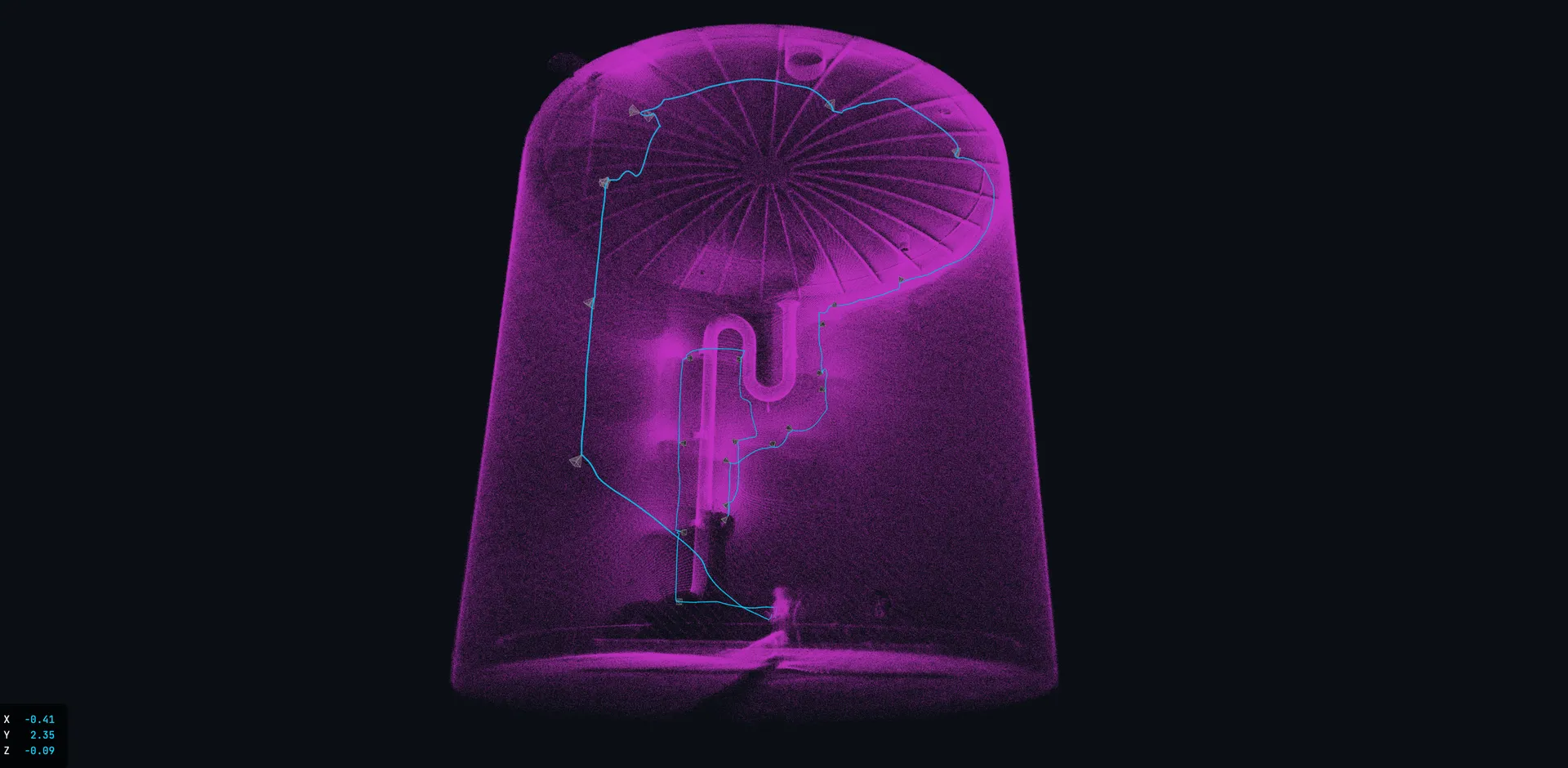
The ROV delivers high-resolution 4K underwater video footage of all tank areas: walls, floor, welds, coatings, internals and connections. Additionally we create a structured findings report with annotated screenshots, damage classification and action recommendations.
What does the documentation look like?
You receive a structured report with photos and video sequences, clear assignment of documented areas, description of anomalies, and assessment and action recommendations. Documentation is oriented to VdS CEA 4001 and EN 12845 – suitable as basis for your insurer and regulatory inspections.
What is MIC corrosion and why is it dangerous?
MIC (Microbiologically Influenced Corrosion) is the most common damage cause in sprinkler tanks. Biofilm-forming bacteria settle on steel surfaces and attack the material from the inside – accelerated by sediment layers as substrate. Typical damage pattern: deep pitting that starts invisibly and can penetrate the entire wall. Without regular inspection: undetected until leakage.
What damage occurs most frequently?
Typical findings from practice: sediment deposits, corrosion on pipelines, brackets and internals, coating damage (blistering, delamination), MIC pitting at welds and floor, scale build-up and biological deposits. In concrete tanks: cracking, carbonation and reinforcement corrosion.
Does this also work for concrete tanks?
Yes – and there it is particularly useful. Typical findings in concrete tanks are cracking, carbonation and reinforcement corrosion – damage that can barely be detected without ROV inspection. Construction joints and connection points are particularly at risk.
Does this also work with poor visibility in the water?
Yes. The ROV is equipped with high-resolution cameras and active lighting. Even with very low visibility, relevant areas can be reliably documented.
How long does a sprinkler tank inspection by underwater drone take?
Typically half a day to a full day on site (approx. 3–8 hours), depending on tank size, accessibility and number of anomalies. The ROV is deployed through an existing opening – no special preparation required. The report is delivered within a few working days.
Does fire protection stay active during inspection?
Yes, your sprinkler system remains operational at all times. Since the tank is not drained, your fire water reserve is available throughout the entire inspection. No decommissioning, no fire brigade standby, no insurance gap.
Does the system have to be shut down?
No. The inspection is designed not to interfere with live operation. The sprinkler system remains active throughout the entire implementation.
What happens with critical damage?
We inform you directly on site. For relevant findings we provide a clear assessment: monitor, act short-term or immediate action required. This allows you to immediately initiate the necessary steps – without waiting for the written report.
What does ROV inspection cost compared to draining?
Generally significantly cheaper. The biggest difference comes from eliminating draining and refilling, plant downtime and complex logistics. With conventional inspection, the costs for provisional fire protection (e.g. mobile fire suppression systems) and the required specialist teams are added. ROV inspection is typically 60–80% cheaper than a conventional inspection with draining.
For which tank sizes is the procedure suitable?
Typical operating range: approx. 200 m³ to 2,500 m³. Larger or smaller vessels are also possible – depending on access and geometry. In case of doubt, we clarify this briefly in advance.
Can inspection also take place outside of inspection deadlines?
Yes – and this is often useful. Typical occasions are discoloured water, unusual water loss, algae formation or other anomalies during operation. Also regular pump tests or an upcoming insurance review are good occasions for an ROV inspection.
Who carries out the inspection?
The inspection is carried out by a specialised ROV pilot with extensive practical experience from hundreds of tanks. We deliver a sound technical condition assessment – the formal evaluation and any maintenance decisions remain with your fire protection officer, insurer and relevant authorities.
Do I get the raw data?
Yes. In addition to the structured inspection report, we also provide the complete video material on request – for your own documentation, surveyors or insurers.
How do I find out whether this is worthwhile for my tank?
Simply send us photos (manhole, access, optionally interior), year of construction, volume and the last known inspection. You will quickly receive an honest assessment of feasibility and expected findings – free of charge and without obligation.
Get in Touch
Questions about sprinkler tank inspection by underwater ROV, or need a quote? Fill out the form and we will get back to you within 24 hours.